
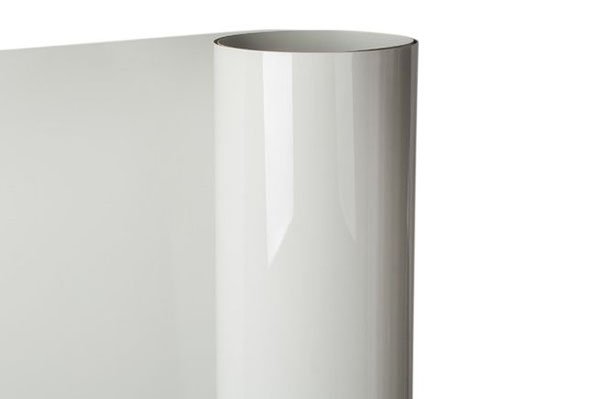
A mirror finish is unforgiving. Any waviness in the substrate, any dust in the lamination line, any inconsistency in the film itself shows up as a visible defect under showroom lighting, and a cabinet door that looks slightly wrong at the point of sale does not sell. That is why panel manufacturers care less about the gloss number in a catalogue and more about whether the same number arrives on every roll. Goflexpet extrudes high gloss PETG film on its own lines in Ganzhou, China, for furniture, cabinetry and appliance panels.
Glycol modification gives this polyester a wider forming window and better impact resistance than standard PET, and it does not require the plasticizers used in PVC. For decorative lamination that translates into a surface that wraps a panel edge without stress-whitening, resists chipping in transit, and holds color without yellowing. Compared with a lacquered finish it needs no spray line and no curing time; compared with acrylic it is less brittle at the edges. A glossy sheet in PETG also cleans easily, which matters for kitchen and bathroom furniture more than any specification on paper.
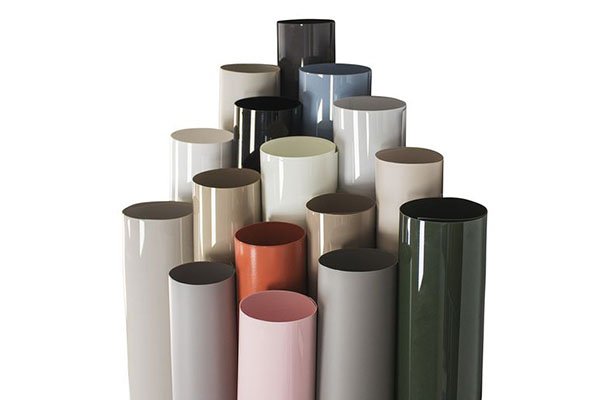
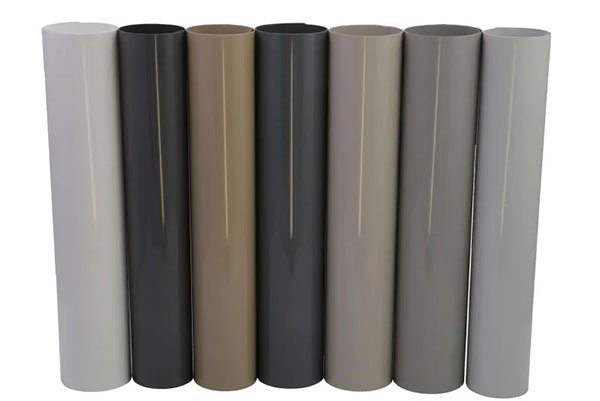
Solid colors, metallic effects and printed patterns are all available on the same gloss base.
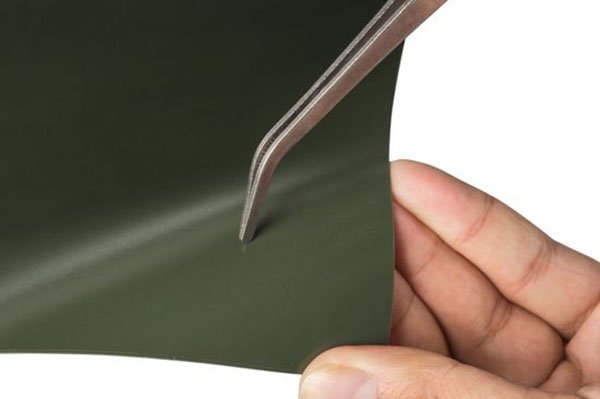
The weakness of any gloss plastic surface is scratching, and it usually happens in the factory rather than in the customer's kitchen — during stacking, edge banding and packing. Two things address it. A hardened 6H surface raises the threshold at which handling marks appear, and a peelable protective film keeps the panel covered until installation. We supply both, and we recommend both together for high gloss plastic panels that travel long distances. Where the finished part will sit in direct sunlight, say so at the inquiry stage so we can specify a grade with the appropriate UV package.
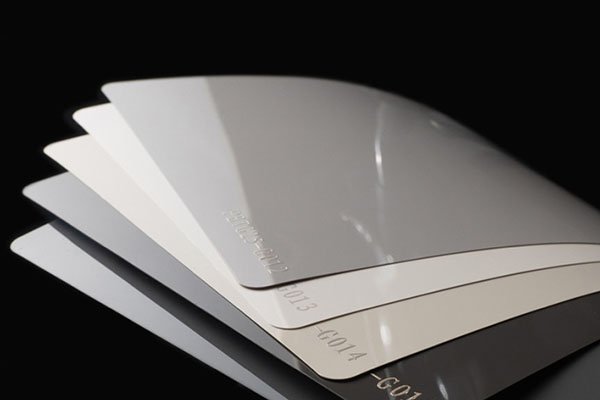
Gloss level is measured in gloss units at a fixed angle, and different markets expect different targets. Send a physical sample of the finish you are matching rather than a description, since "high gloss" covers a wide range in practice.
A plastic gloss level is only half of what the customer sees. Any waviness in the board telegraphs straight through a reflective film, so substrate flatness and adhesive spread matter as much as the film specification — a point worth raising with your panel supplier before blaming a batch. The film laminates to board with standard flat lamination equipment and PUR or EVA adhesive systems, and it can be used for post-forming profiles within its forming window. Line speed, roller temperature and adhesive choice all affect the final appearance, so we send material for a trial run before a bulk order rather than after one. A gloss sheet that performs on one lamination line and fails on another is almost always an adhesive or temperature issue, not a film defect — and it is far cheaper to find that out on a sample roll.
Sourcing a polyethylene gloss film through an intermediary means color approvals travel through a third party and batch consistency is nobody's specific responsibility. We extrude, coat and pack in one facility, hold ISO 9001 certification, and support OEM and ODM production with custom colors, gauges and widths. Send your gloss target, color reference, panel size and annual volume to sales@goflexpet.com, and we will come back with a specification, pricing, minimum order quantity and samples.
Most flat lamination onto MDF or particleboard uses film in the thinner part of our 0.18–2.0 mm range, while rigid panels, displays and fabricated parts use heavier gauges. The right choice depends on your press, your adhesive and whether edges are wrapped. Tell us the panel construction and lamination method and we will recommend a gauge rather than a range.
It can, which is why we supply hardened 6H grades and a peelable protective film. Most visible damage happens in the factory during stacking, edge banding and packing rather than in service. Using a hardened surface together with protective film until installation removes nearly all of it. For panels shipped long distances we recommend specifying both from the start.
Yes. Color is matched to a Pantone or RAL reference, and solid, metallic and printed patterns are all produced on the same base. For the finish itself, send a physical sample of what you are matching — gloss is measured in gloss units at a set angle, and descriptions like high gloss or mirror finish cover a wide practical range between suppliers.
Only in a grade specified for it. Standard decorative film is made for interior furniture, cabinetry and appliance panels. Where a panel faces direct sunlight or an exterior environment, the material needs an appropriate UV package, so state the exposure when you inquire and we will confirm whether we can supply a suitable grade for that application.
Both depend on color, gauge and width, since a custom color requires a dedicated production run while stock clear and standard shades do not. Send the specification with your target volume and we will confirm minimum quantity, price and lead time together. Samples for lamination trials are available before you commit to a production order.
