


| Order detail | What to confirm |
|---|---|
| Pattern and finish | Choose a physical colour and finish reference. Mark the vein direction and panel sequence on your cutting layout. |
| Film dimensions | State the required thickness, usable width and trim allowance. Confirm availability for the selected pattern. |
| Repeat and alignment | Request the repeat length and a sample wide enough to compare adjoining doors. If the design calls for bookmatching, confirm a mirrored pattern is available. |
| Bonding trial | Identify the board, adhesive and lamination process. Check adhesion, edge appearance and colour on the finished sample panel. |
| Supply and packing | Specify roll or cut-sheet format, quantity by pattern, core and winding requirements, packing and destination for quotation. |

Mark the top edge of each cabinet front on the elevation drawing. For adjoining doors, lay the film across both panel positions and check where the veins meet at the gap. Include trim and edge allowances in the cutting plan.
For a bookmatched pair, ask for a sample of the mirrored design. For a continuous run, request enough of the pattern repeat to see both the joint and the next prominent vein. Approve the layout under the lighting planned for the room.
Related resources: PETG decorative films, PETG film for decorative panels, PET film applications

Compare a laminated sample with the approved colour reference under the same light. View it straight on and at an angle to judge vein contrast, gloss and any change in the appearance of the underlying board.
Trim and edge-band the trial panel using the intended production process. Inspect cut edges, corners and joints for lifting, whitening or visible pattern shifts before agreeing on acceptance criteria.
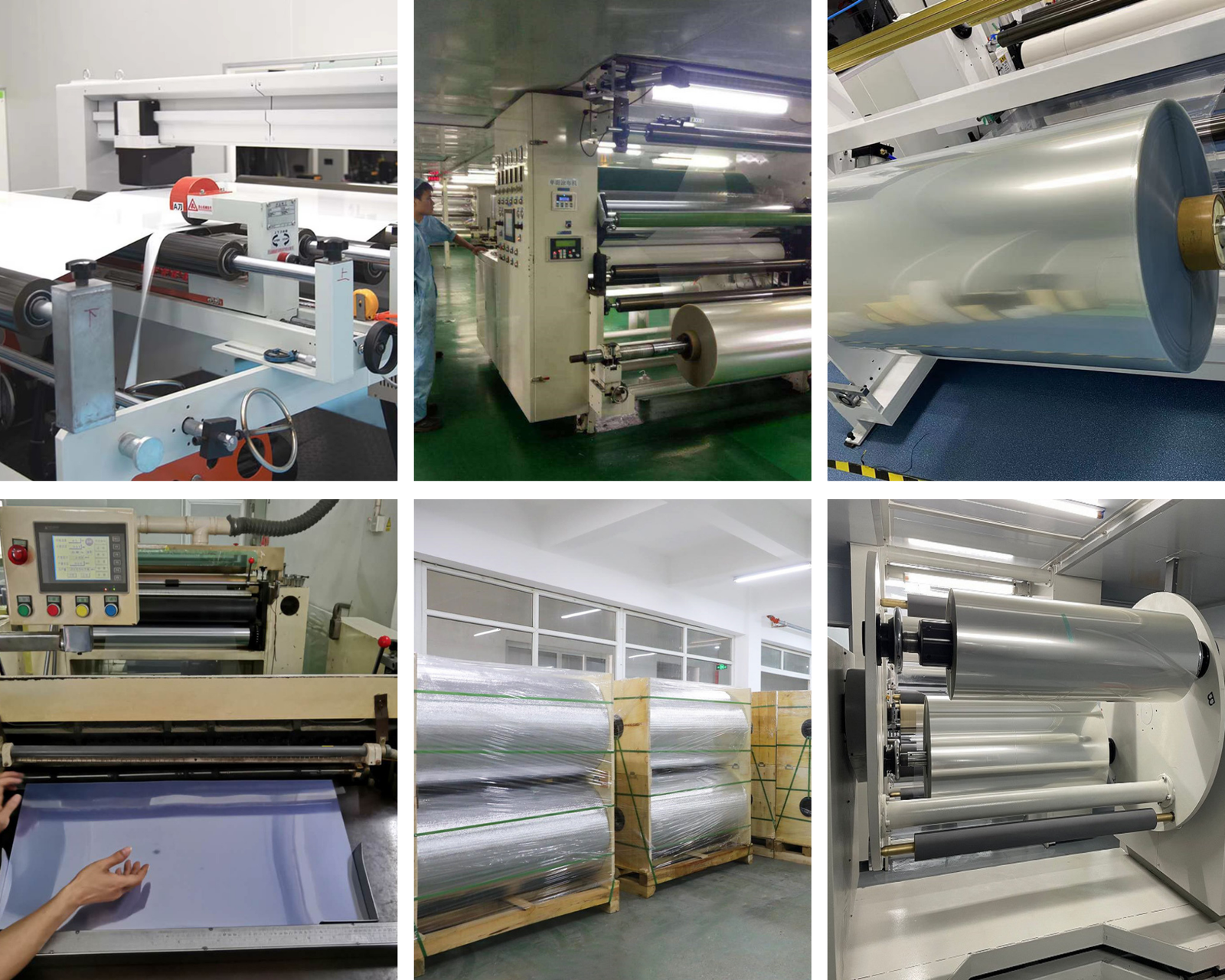


Use these related application collections to compare material format, thickness, surface treatment, forming behavior and RFQ details before requesting a production quote.
