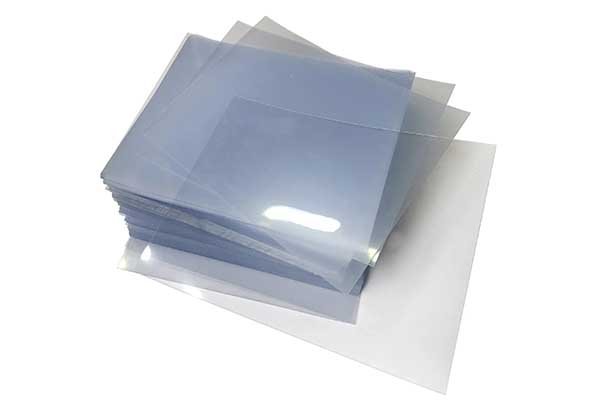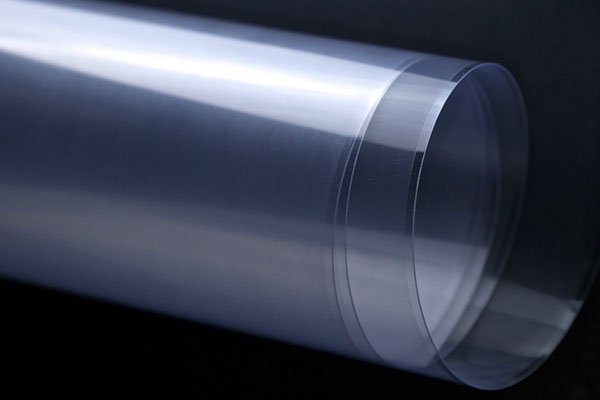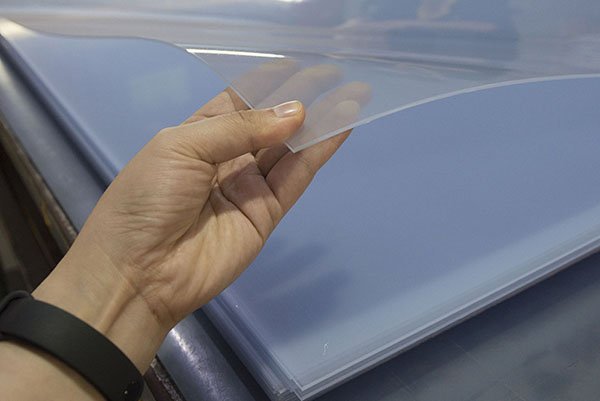


GAG plastic sheet solves a problem that neither APET nor PETG solves alone. APET is rigid, glass-clear and inexpensive, but it will not take a high-frequency weld and it is fussy about folding. PETG welds and folds beautifully but costs more per kilogram. A GAG structure — PETG skin, APET core, PETG skin, co-extruded in one pass — puts the useful surface where the process touches the material and the cheaper polymer where it only has to provide stiffness. Goflexpet co-extrudes this material on its own lines in Ganzhou, China.
The name describes the sandwich: G for the glycol-modified PETG skins, A for the amorphous PET core. Because the outer layers are PETG, the sheet responds to high-frequency welding, which pure APET cannot do — the polarity of the glycol-modified skin is what allows a dielectric seal. The same skins fold without stress-whitening along the crease, take print and hot foil cleanly, and give a deeper gloss than plain APET. The core keeps the sheet rigid and keeps the cost close to standard PET. Layer ratios are set during co-extrusion, so a customer needing more weld strength gets thicker skins rather than a different material.
Buyers usually arrive at this material after a folding trial fails on plain APET, or after a welding line rejects it outright. If either has happened on your line, that is the symptom this construction addresses. The other common route is a print problem: brands moving from paperboard to a clear pack often find that ink density and hot foil adhesion on plain APET fall short of what their artwork needs, and the PETG skin resolves it without a change of converter or press.
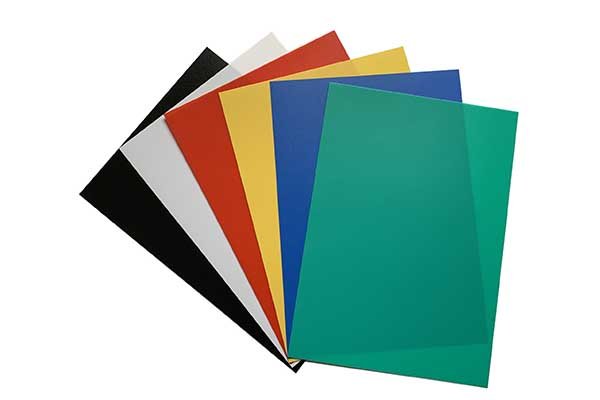
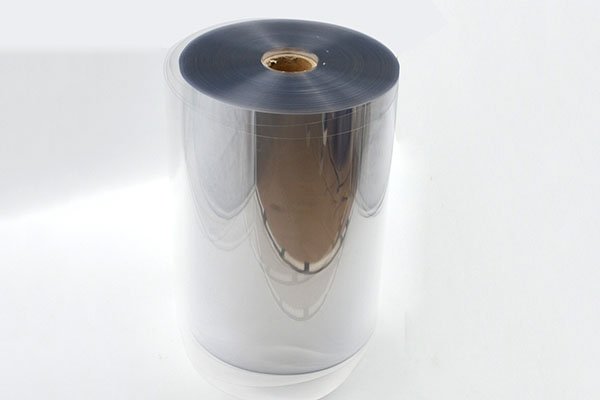
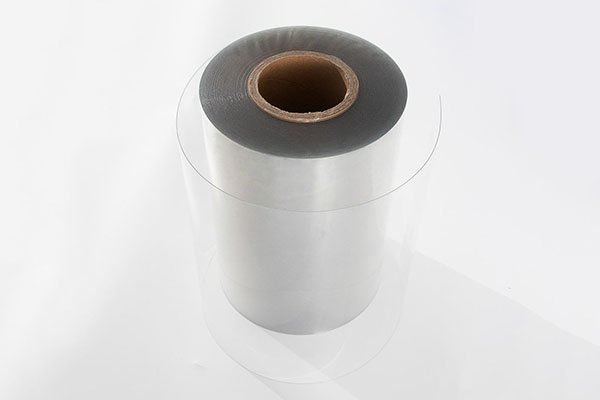
Colored stock is produced as a GAG plastic sheet roll for converters running continuous lines, and as cut sheet for shorter or mixed production. The layer ratio is recorded on the specification alongside gauge and width, so a repeat order reproduces the weld and fold behavior you qualified, not just the thickness.
Most quotations for a china GAG plastic sheet come from trading companies that never see the extruder. The difference shows up on the second order, when the skin ratio quietly changes and a welding line that was stable starts producing weak seals. Working with a factory means the layer structure is a documented specification rather than whatever the mill ran that week. Among GAG plastic sheet manufacturers, we produce roughly 50 tons of film and sheet a day across eight automated lines, hold ISO 9001 certification, and comply with REACH and RoHS for European and North American shipments.
As a GAG sheet manufacturer china buyers order from directly, we handle both qualification quantities and repeat production. A GAG sheet wholesale supplier relationship normally starts with a sample roll tested on your own welder or thermoformer, moves to a trial order, and settles into a scheduled monthly volume with the specification locked. OEM and ODM runs are supported, including custom colors, gauges, widths and protective film. Minimum order quantity and lead time depend on color and layer structure, so ask for both when you request pricing.
Send that to sales@goflexpet.com and we will confirm the structure, price and sample availability.
It describes the layer structure of the sheet: a glycol-modified PETG skin, an amorphous APET core, and a second PETG skin, co-extruded together in a single pass. The letters run in the order the layers sit. The construction combines the weldability and folding behavior of PETG with the rigidity and lower cost of APET.
Because APET cannot be high-frequency welded and tends to whiten or crack along a fold. The PETG skins fix both: they accept a dielectric weld, crease cleanly, and hold print and foil better. If your packaging is only thermoformed and never welded or folded, plain APET is usually the cheaper and adequate choice.
Yes. Colored and tinted stock is produced to a Pantone or RAL reference in both roll and cut sheet format, and the color is compounded rather than printed on, so cut edges match the surface. Send a physical reference or a color code with your inquiry, along with volume, since color changeovers affect both minimum quantity and lead time.
From 0.18 mm to 1.8 mm, in widths of 200–1400 mm trimmed to ±1 mm. The skin-to-core ratio is set during co-extrusion and can be adjusted, so a heavier PETG skin is available where weld strength or fold performance matters more than cost. Custom gauges and cut sizes are made to order.
Yes to both. We export around 30% of output to the USA, Europe, Mexico, Brazil, Southeast Asia, India, Bangladesh and Pakistan, and we hold ISO 9001 certification with REACH and RoHS compliance. Samples are sent for qualification before bulk orders so you can test welding, folding and forming behavior on your own equipment first.