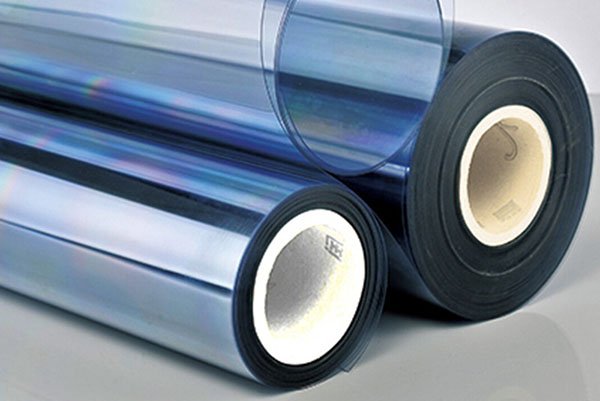
PET and PETG are polyester-based materials; PETG is glycol-modified PET. This comparison helps packaging engineers and procurement teams frame a material-selection inquiry. Review the PET film product family and PETG film product family, then identify the intended pack, supply format, forming process and sample-review criteria. The material name alone does not confirm suitability. Include the grade-specific evidence you need when requesting a quotation.
When you're standing in a supermarket aisle or handling a medical device, you're likely touching one of two materials: PET or PETG. Both are polyester-based plastics that have become indispensable in modern packaging, yet they perform quite differently. For packaging engineers, procurement managers, and manufacturers, understanding these differences isn't just academic—it directly impacts product protection, cost efficiency, and regulatory compliance.
Choosing between PET and PETG starts with the exact resin grade, sheet construction and finished-package requirements. For packaging that will be sterilized, specify the method and exposure conditions before selecting material. For other applications, compare clarity, forming results, impact performance and cost using representative samples rather than relying on the polymer name alone.
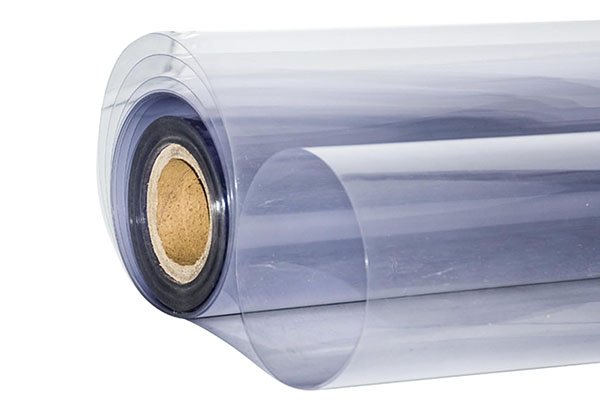
Start the comparison by identifying the exact material offered: supplier grade, sheet construction, thickness, surface treatment and recycled-content specification where relevant. Keep PET and PETG sample references separate so quotation details, technical information and trial results can be traced to the proposed supply.
Compare only the properties that matter to the finished package. Request grade-specific information for mechanical performance, clarity, forming behavior and any required barrier function. A general explanation of polymer structure does not replace evidence for the supplied sheet or formed article.
Use the supplier information to define a sample-review plan. Record which requirements have supporting data, which need trials and which remain unknown before selecting a material.
Compare tensile strength, stiffness and impact performance using data for the exact proposed PET and PETG grades. Check the specimen thickness, test method, conditioning and units before comparing results. A broad high-versus-good ranking does not establish how the finished package will perform.
Define the impact and handling conditions the package must withstand, including service temperature, loading direction and any relevant drop or compression conditions. Evaluate the formed part as well as the supplied sheet; do not assume that every PETG grade will outperform every PET grade.
For a medical-device tray or clamshell, assess mechanical protection and sterile-barrier requirements separately. Use representative finished-package testing for the intended distribution and storage conditions. A material comparison alone does not establish that a package will maintain sterility after an impact.
For complex trays, clamshells or multi-compartment packs, compare PET and PETG on the actual tool and forming line. Evaluate wall-thickness distribution, corner detail, haze, trimming and finished-part strength. Material selection should follow the trial results rather than a blanket claim that one polymer always forms without defects.
Thermoforming conditions depend on the resin grade, sheet thickness, sheet history, tooling and heating system. Ask for the sheet supplier’s processing guidance, then confirm the operating window on the production line. Record actual sheet temperature separately from oven or heater settings.
A single temperature range should not be treated as a universal PETG thermoforming setting. Sheet temperature, heater settings and extrusion melt temperature describe different process conditions. Eastman’s thermoforming guidance for Eastar 6763 and Tritan MP100 gives separate recommendations for those grades. Use guidance for the material actually supplied and validate heating time, forming detail, cooling and scrap rate during trials.
For hot-fill, heated contents, refrigerated or frozen applications, specify the complete temperature and exposure-time profile. Confirm dimensional stability, sealing, impact performance and package integrity under those conditions. Do not infer hot-fill or freezer suitability from the PET or PETG name alone.
For medical and pharmaceutical packaging, assess sterilization compatibility for the exact resin grade and complete package. Eastman publishes sterilization guidance for Eastar 6763 that depends on controlled processing conditions. These recommendations apply to the named grade and do not establish that Goflexpet material has the same qualification.
Specify the sterilization method, dose or cycle conditions, number of exposures and required shelf life. Validate the formed tray, lid or seal and packaged device together, including appearance, mechanical properties and package integrity after sterilization and aging. A general PET-versus-PETG comparison cannot establish sterile-package suitability.
For chemical exposure, identify the substance, concentration, contact temperature, exposure time and mechanical stress on the finished part. Request compatibility information for the exact PET or PETG grade and evaluate representative samples under those conditions. This guide does not establish that PETG is universally more resistant to chemicals or solvents.
For transparent packaging, compare light transmission, haze and visible defects for the proposed PET and PETG grades at the required thickness. Request results that identify the specimen, test method and surface condition instead of treating a single transmission percentage as a property of every grade.
Review PET and PETG samples under the same lighting and inspection conditions, including samples after the intended forming or converting process. Neither material name alone establishes which finished package will have better clarity.
It's worth noting that both materials can be enhanced with anti-fog coatings for cold storage applications, which can improve their performance in refrigerated and frozen environments where condensation would otherwise obscure visibility.
For a purchase comparison, request PET and PETG quotations against the same thickness, tolerance, dimensions, finish, order quantity, delivery terms and destination. Record any differences in the offered specifications before comparing unit prices.
Review material price together with the finished-package production cost. Confirm whether the proposed grade requires different tooling, heating, trimming or other processing steps, and use trial records to assess yield and rejected parts. Do not assume a cost advantage from the polymer name alone.
Compare current quotations for equivalent specifications and quantities, then include forming cycle time, energy use, scrap, trimming and rejected parts in the cost review. Use representative line trials to estimate processing costs; a universal PETG price premium or production-speed advantage is not established by this guide.
For a food tray, lid or clamshell, define the food type, contact conditions, filling process, closure and intended storage or display sequence. Compare candidate grades against those requirements. Confirm any shelf-life or barrier target with appropriate finished-package evidence.
For a frozen-food tray, assess visibility, condensation, low-temperature handling and package integrity using the proposed grade and finished pack. Request food-contact documentation covering the destination market, food type, contact time and temperature. A generic food-grade label does not by itself establish suitability for that application.
For a shaped confectionery tray or compartmented pack, compare appearance, forming detail, wall-thickness distribution and protection during handling using representative samples. Select the proposed PET or PETG grade from the trial results instead of assuming that a premium product requires one polymer.
For a surgical-instrument tray or clamshell, start with documented requirements for the resin grade, forming geometry, closure and sterilization process. Request relevant material information and evaluate representative finished packages under the intended cycle and distribution conditions before approval.
For a multi-compartment medical tray, trial the required depths, corner radii and instrument-retention features. Check wall thickness, trimming quality and closure performance after forming. Select the material and package design through documented testing rather than assuming that all PETG grades maintain sterility or that all PET grades are unsuitable.
For electronics packaging, define mechanical protection, visibility and any electrostatic-control requirements separately. Identify the proposed grade or treatment and request relevant test information; the PET or PETG name alone does not establish ESD performance.
For an accessory clamshell, evaluate the complete package for retention, closure, handling and transport. If different materials are proposed for separate components, check their joining and end-of-life requirements as part of the same review.
Choosing between PET and PETG should follow a systematic evaluation of your specific requirements:
Consider PET when it meets the project’s clarity, rigidity, forming and cost requirements. Confirm performance using the specified grade and finished-package design, including any impact, temperature, food-contact or sterilization requirements.
Consider PETG when trials with the specified grade demonstrate the forming detail, toughness or other performance needed for the application. Verify chemical exposure and sterilization requirements separately; the material name alone does not establish compatibility or lower production cost.
Define the destination market and intended contact conditions when requesting material documentation. Food-contact or medical-packaging suitability depends on the specified material and finished application. Confirm the applicable documentation and testing for that use rather than assuming that either polymer automatically meets every requirement.
If a package combines different materials, assess each component and the complete assembly. Check forming and joining compatibility, closure integrity, distribution performance and any sterilization or end-of-life requirements. A combination should be selected only when the finished-package results justify it.
Similarly, food manufacturers might use PET for the primary container and PETG for the protective outer packaging, ensuring product visibility while providing enhanced protection during distribution.
Before making a recyclability claim, confirm the collection and recycling route available for the finished article in its destination market. Identify the polymer, layers, coatings, labels, adhesives and other components, and check the receiving program or recycler requirements. A PET or PETG material name alone does not confirm local acceptance.
If a coating, treatment or multilayer construction is proposed, identify its purpose and request data for that specific construction. Evaluate the relevant clarity, barrier, forming and handling requirements, then check whether the treatment changes the intended recycling route.
There is no universal winner between PET and PETG. Shortlist grades against the application’s requirements, compare representative samples and confirm forming and finished-package performance. Include temperature exposure, chemical contact and any sterilization conditions in the RFQ so that material selection follows the intended use.
The most successful packaging decisions come from a thorough understanding of your product's protection requirements, regulatory environment, manufacturing capabilities, and cost constraints. By evaluating your specific needs against the distinct properties of each material, you can select the option that delivers optimal performance and value.
To discuss a PET or PETG packaging project with Goflexpet, provide the intended use, drawing or sample reference, dimensions, processing steps and acceptance criteria. Ask which specifications and supporting documents are available for the proposed grade, and agree a sample review before approval.
| Property | PET | PETG |
|---|---|---|
| Clarity | Compare grade-specific transmission and haze at the required thickness | Compare grade-specific transmission and haze after the intended processing |
| Tensile Strength | Compare grade-specific data using the same method and specimen conditions | Compare grade-specific data using the same method and specimen conditions |
| Impact Resistance | Test the proposed grade and formed package at the required service temperature | Test the proposed grade and formed package at the required service temperature |
| Flexibility | Compare stiffness and deformation for the specified thickness and geometry | Compare stiffness and deformation for the specified thickness and geometry |
| Thermoforming Temperature | Use grade-specific sheet guidance; verify on the forming line | Use grade-specific sheet guidance; distinguish sheet and heater temperatures |
| Thermoforming Evaluation | Trial forming detail, wall thickness and trimming | Trial forming detail, wall thickness and trimming |
| Sterilization Compatibility | Validate the exact grade and finished package for the specified cycle | Validate the exact grade and finished package for the specified cycle |
| Chemical Resistance | Verify the exact grade for the specified chemical and exposure conditions | Verify the exact grade for the specified chemical and exposure conditions |
| Cost | Compare equivalent quotations and finished-package trial costs | Compare equivalent quotations and finished-package trial costs |
| Recyclability | Confirm acceptance of the finished article with the destination collection program or recycler | Confirm acceptance of the finished article with the destination collection program or recycler |
| Application Selection | Match the proposed grade to the defined package requirements and trial results | Match the proposed grade to the defined package requirements and trial results |
For buyers comparing PET and PETG in real packaging projects, these application pages can help narrow the specification path: PET film and sheet applications, PET film for packaging, PET sheet for thermoforming, PETG film for decorative panels, and PETG film for furniture surface applications.
PET is often preferred for food packaging when buyers need clarity, rigidity, cost efficiency, and thermoforming performance. PETG may be considered when higher toughness, easier forming, or different processing behavior is required.
PETG is commonly used for decorative furniture panels because it can support high-gloss, matte, wood grain, marble, metallic, embossed, and skin-sense finishes for MDF, HPL, cabinet, and wall panel applications.
Buyers should include material, thickness, width, roll length, color, surface finish, forming method, application, compliance requirements, sample needs, quantity, packaging method, and destination country.
Related pages: PET Film, PETG Film, APET Sheet, PETG Film for Furniture Surface, and Contact Goflexpet.